
01Compare the support arrangements
| Arrangement | Product or carrier condition | Checks |
|---|---|---|
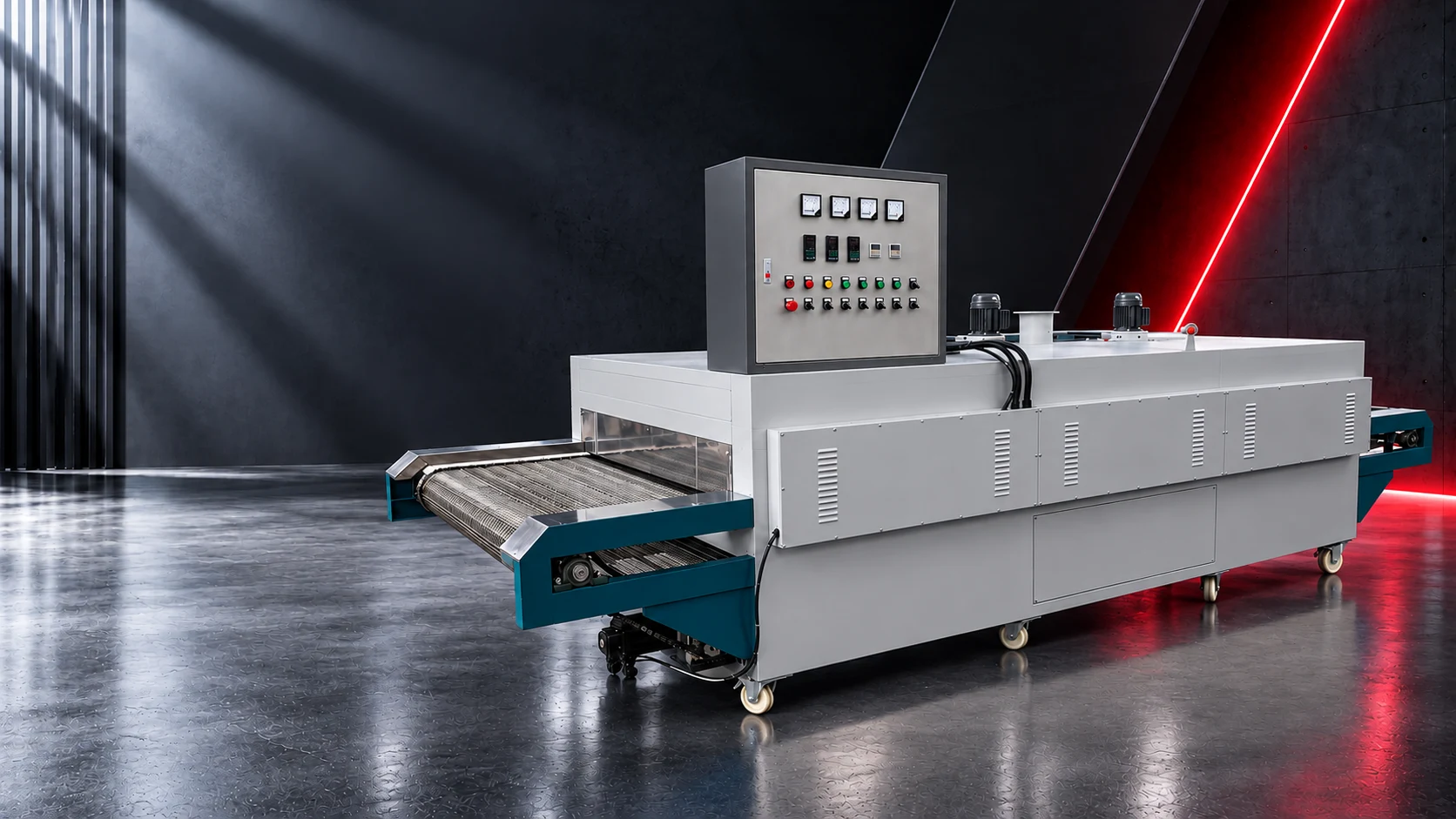
| Wire mesh | Stable on mesh, or supported by a tray | Opening size, marks, load, tracking and cleaning |
| Flat belt | Needs continuous support compatible with the belt | Actual surface temperature, substances, splice and contamination |
| Rollers | Rigid base or tray capable of spanning the pitch | Support distribution, slip, synchronization and transfers |
02Document the difficult parts
Include the smallest, thinnest, flexible and off-center parts, not just the largest one. State orientation, base flatness, part-plus-carrier mass and whether contact marks are acceptable. Feet, holes or curved bases can change handling behavior.
A required carrier also enters the hot zone. Include its mass, cleaning and circulation in the review rather than retaining only the net product mass in the heat balance.
03Do not specify material from setpoint alone
A belt or component must suit its contact temperature, load, tension, process substances and operating conditions. Ask which conditions the component documentation covers and whether a temperature figure concerns air or the component itself.
There is no universal mesh, flat-belt or roller temperature rating here. The same arrangement can use different materials, joints and support designs.
04Trial transfers with representative products
Check entry, exit and downstream transfer using the proposed orientation. Record support of the smallest item, tray stability and deposits from tacky materials. A cold handling trial does not establish hot dimensional behavior or the required product-temperature process.
Review the support comparison with samples, carrier drawings and output requirements. Once loading is established, check pitch, speed and residence time.
↗Sources and scope
References support the design principles discussed here. Product-specific limits must come from the equipment instructions and process specification. Illustrative values are not purchase specifications.