
01Look at the temperature trend
Record startup, stable production and reduced throughput. Compare temperature, heater output and cooling commands. If temperature regularly rises out of range after heating stops, investigate the cooling requirement.
Check sensor placement and control behavior first. An unrepresentative reading can lead to an unnecessary hardware change.
02Compare air and liquid cooling
Air cooling needs a clear airflow path and access for maintenance. Liquid cooling needs suitable fluid, fittings, flow and pressure, as well as access for cleaning.
If the machine already has cooling, start with the original drawings. Rerouted pipes can get in the way of leads, covers and band removal.
03Specify heating and cooling separately
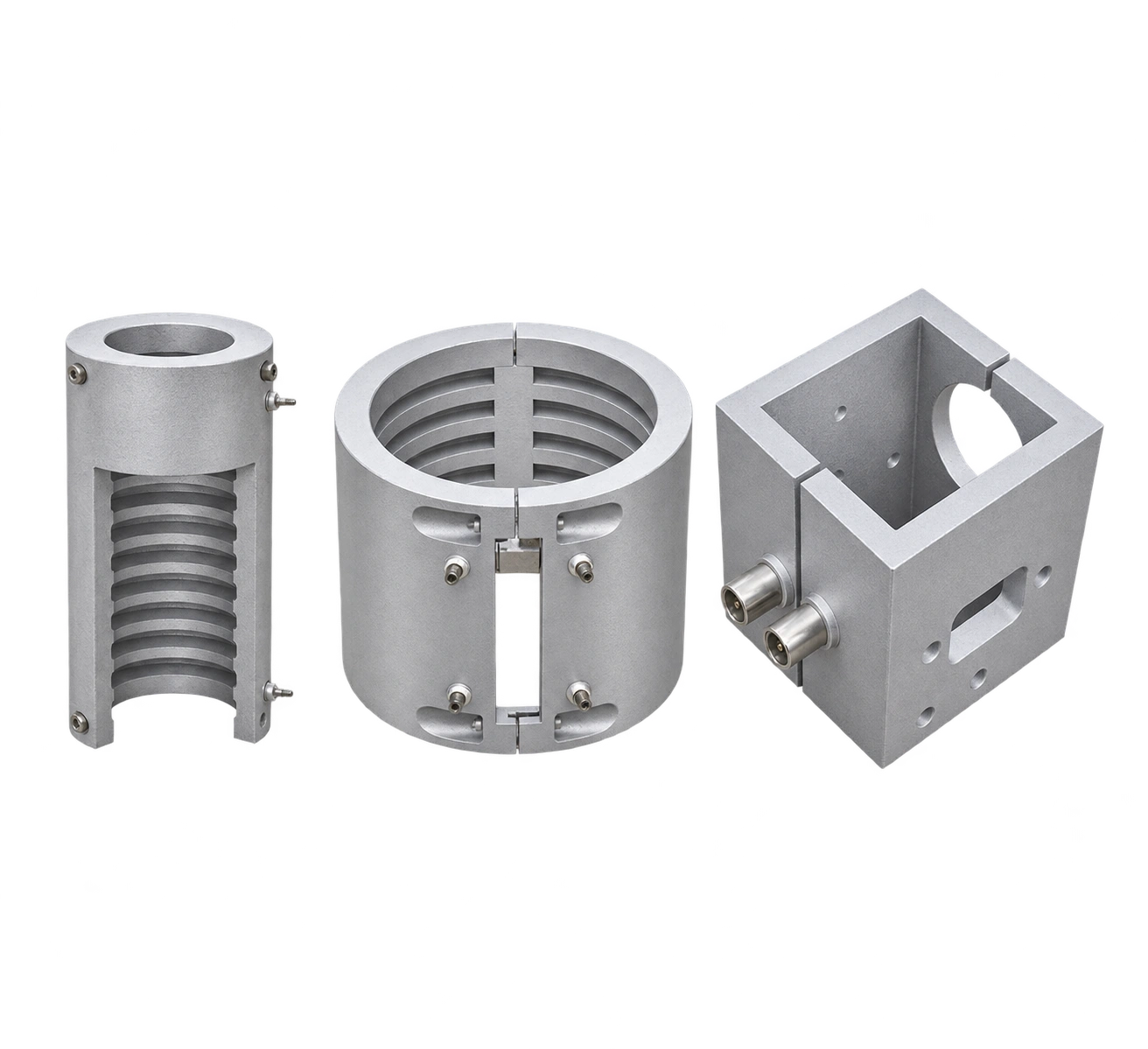
Give the mounting diameter, width, clamping, sensor holes and terminals. For heating, list voltage, wattage and operating temperature. For cooling, list the fluid, flow, inlet temperature and connections.
Provide dimensions or clear photos of the fittings and identify the flow direction so the replacement can connect to the existing circuit.
04Verify the zone under load
Check heat-up and stable production separately. For liquid-cooled units, follow the manufacturer’s procedure for checking leaks, flow and maintenance.
When replacing only one zone, monitor the neighboring zones too. Their heat can affect the new band’s apparent performance.