
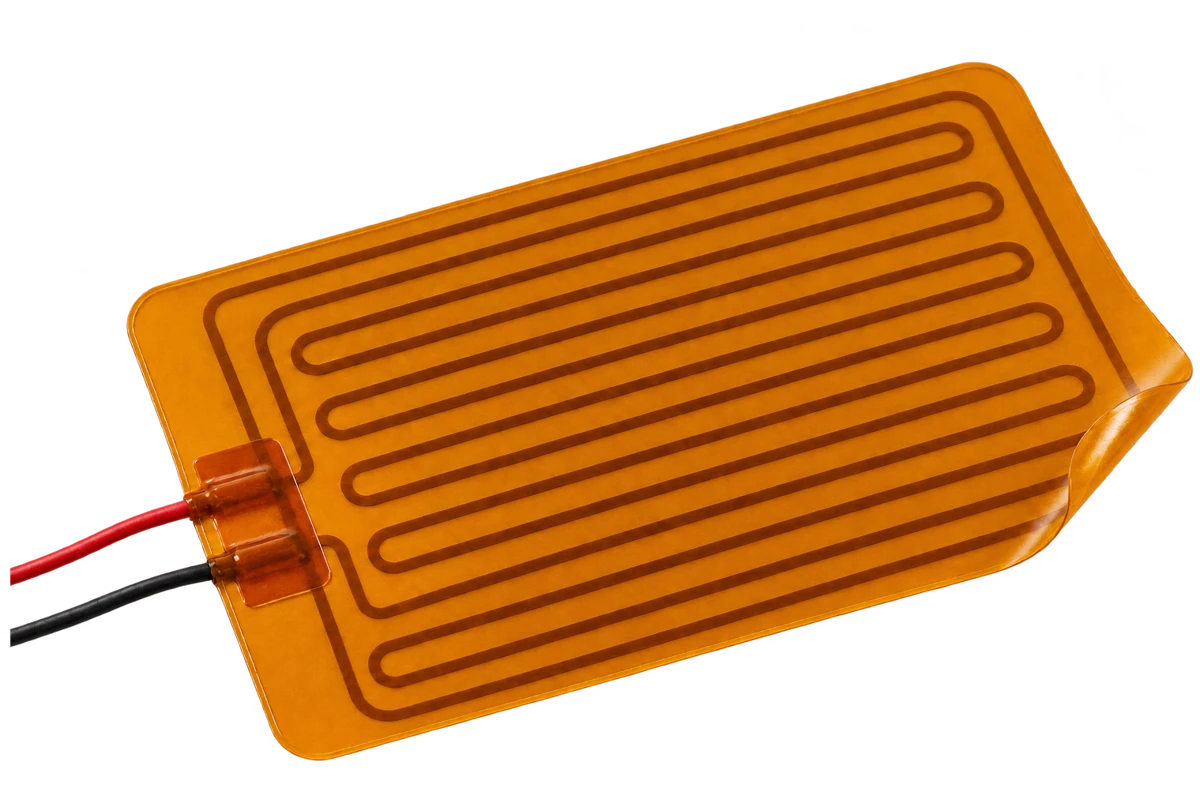
01Measure the assembled thickness
Polyimide film heaters are often considered where space and weight are limited. Include the adhesive, terminal transition and lead exit when measuring the installed thickness.
If the heater sits under a cover, check that the surface is flat and the cover cannot pinch the leads.
02Check the contact on curved surfaces
Silicone rubber heaters can suit some flat and curved mounting surfaces. Allowable bend radius depends on thickness, construction and the manufacturer’s limits. Ask separately about repeated bending.
Mark holes, raised features and keep-out areas on the drawing. Use those dimensions to decide whether to split the heater into several pieces.
03Check the whole material stack
Review limits for the heater insulation, adhesive, leads and sensor. For vacuum, moisture, oil or chemical exposure, describe what will contact the heater and check the model’s data.
Test samples on a surface and in an environment that represent the intended installation.
04Compare both on one drawing
Provide the outline, active area, voltage, target power, mounting method and operating temperature. Compare lead routing and usable heated area as well as thickness.
If the heater will need replacement, check whether it can be removed without damaging the mounting surface.