
01Check the headroom above a vertical furnace
Draw the open lid, lifting hook, fixture and suspended part on the same elevation. The roof may look high enough while the beam or crane hook limits the usable lift.
For baskets of spinnerets or short parts, measure the loaded basket. Include both the fixture and the parts when checking lifting capacity.
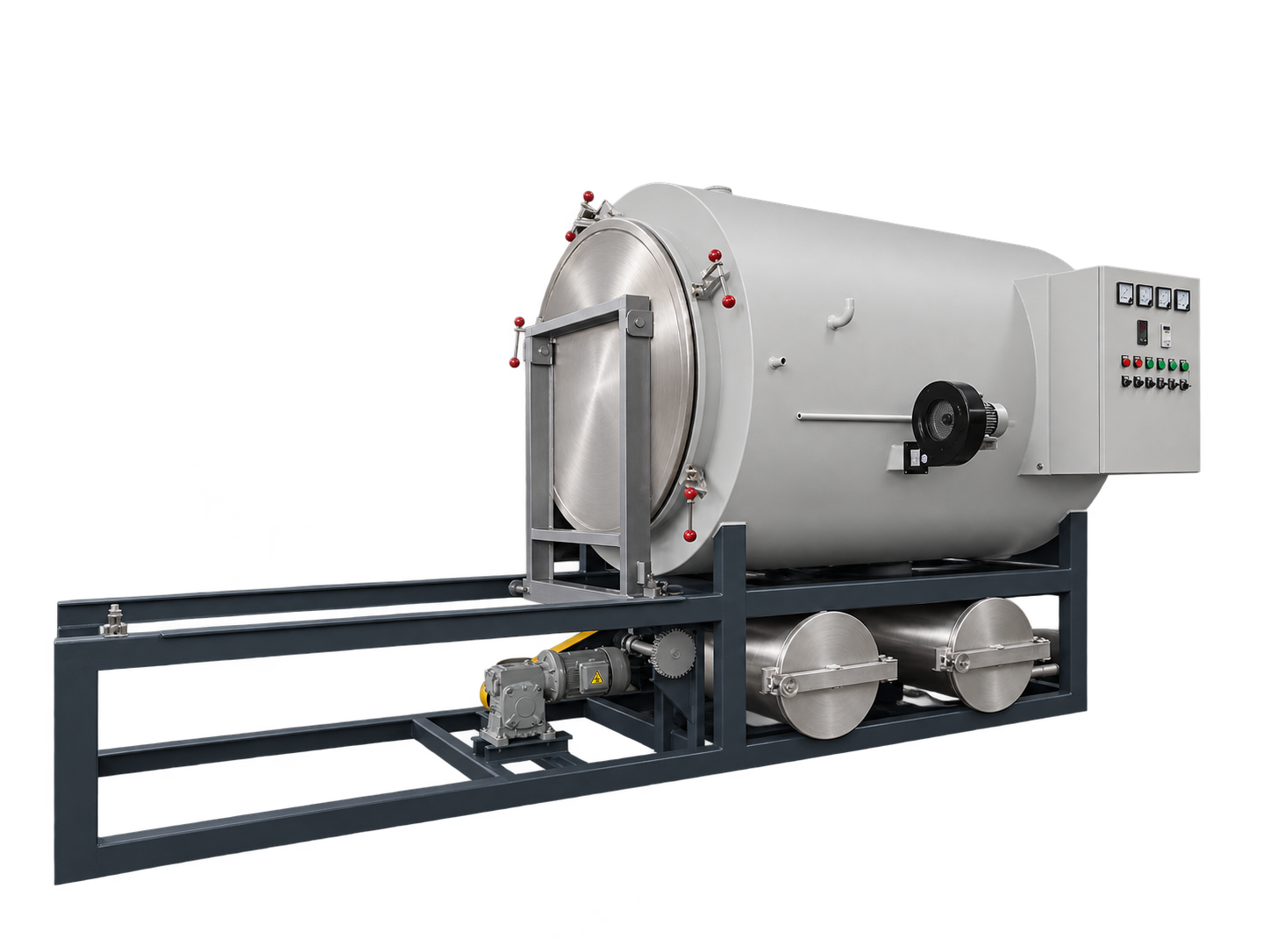
02Allow space in front of a horizontal furnace
An end-loading furnace may use a cart for long dies or filter assemblies. Allow room for the door to open, the cart to roll out and the part to transfer to the next station.
Show any overhang on the cart drawing. Mark columns, aisles, forklift turning space and maintenance access.
03Measure the load as it will enter the furnace
Chamber dimensions, door clearance and usable fixture space are separate measurements. Ask for a loading drawing and check the permitted part orientation, supports and drainage path.
List typical loads separately from occasional oversized parts. A photo of the largest die tells you little about how often the furnace will be used at that capacity.
04Prepare the information for a quote
Send the part dimensions and weights, residue type, batches per shift, loading orientation and site clearances. Ask what the quote includes for fixtures, melt collection and exhaust treatment.
If you arrange a sample trial, record loading time and the acceptance criteria along with the cleaning result.