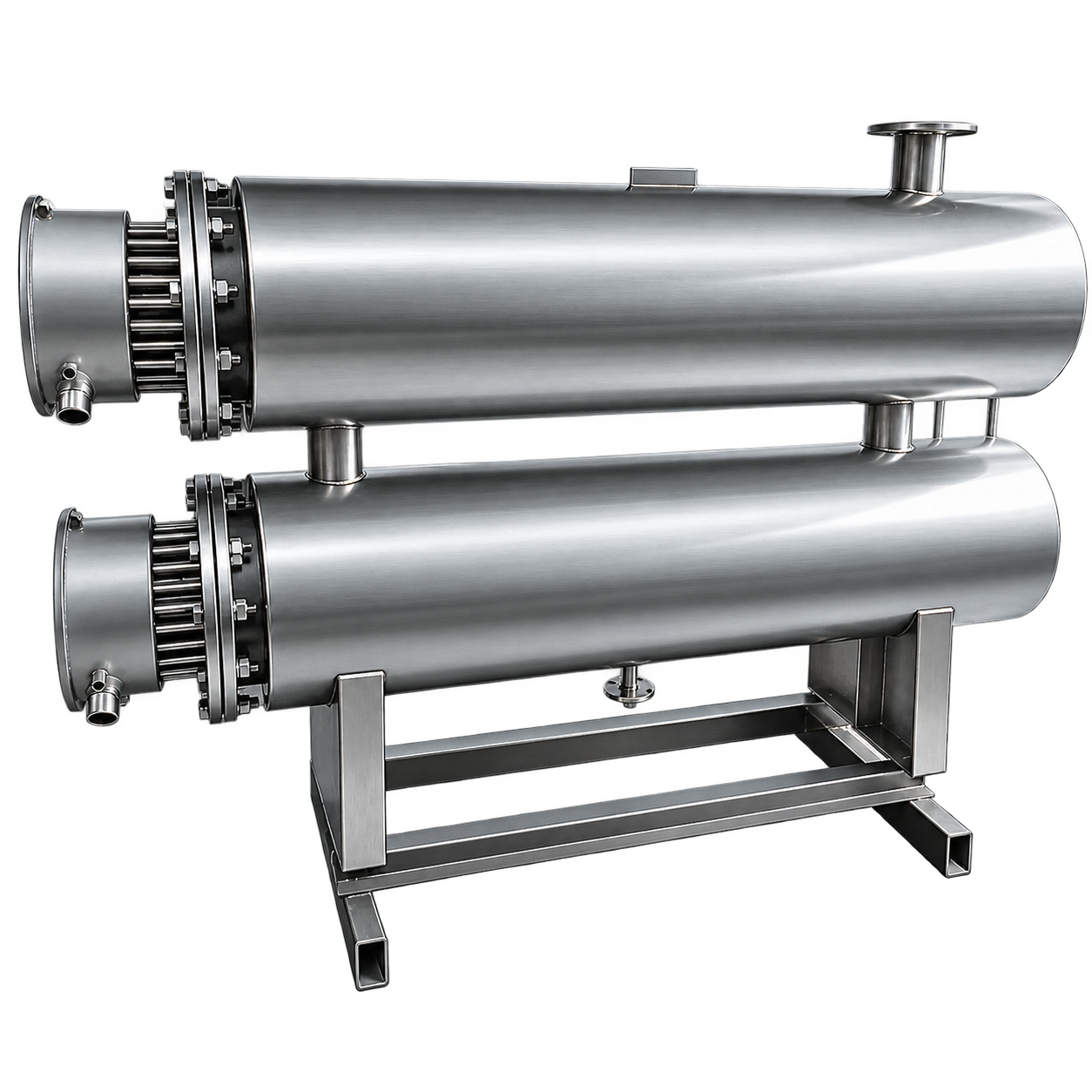
Complex media
Gas, liquid, high viscosity or particle-loaded media set the velocity, surface load and material choice. Handled badly, they lead to coking or thermal decomposition.
 DIANREZHANELECTRIC HEATINGIndustry Solutions中文
INDUSTRY SOLUTION · S1
Heat-up, trace heating and temperature holding for process media. Fix medium, pressure, corrosivity and Ex requirements first.
SCENARIO
Feed gases, process liquids, residual oil, waxy or viscous media have to be heated continuously or held at temperature inside the line, so they do not solidify or thicken and upset transport and reaction. Such sites often combine pressure, corrosive media and hazardous areas, which set hard requirements on construction, materials and electrical safety.
Gas, liquid, high viscosity or particle-loaded media set the velocity, surface load and material choice. Handled badly, they lead to coking or thermal decomposition.
Line pressures span a wide range. Flanges, shells and seals must be checked against design pressure, with clearance left for maintenance.
Where flammable zones are involved, zone classification, Ex protection level and temperature class must be fixed, with over-temperature and low-flow interlocks.
Chemical processes are sensitive to ramp rate and fluctuation, so staged heating, sectioned temperature measurement and PLC control are normally required.
SOLUTION PATH
Fix the medium, phase, density, specific heat and viscosity, and whether solids or corrosive components are present, then confirm flow, inlet temperature, target temperature and working pressure.
Compute theoretical power from mass flow and temperature rise, then add line heat loss, insulation condition and start-up margin to set total power and stage grouping.
Choose horizontal, vertical or circulation type from the available space and line routing, and define flange standard, port direction and access position.
Select Ex electrics and temperature class for the zone, and provide over-temperature protection, flow interlock, remote measurement and automatic control.
RECOMMENDED EQUIPMENT
FAQ
Coking usually comes from excessive surface load or insufficient velocity. At selection stage keep the element surface load down, guarantee a minimum medium velocity, avoid dry firing, and add low-flow and over-temperature interlocks where needed.
Zone classification and Ex rating are normally issued by the design institute or the operator’s safety department. For selection we need the zone (for example Zone 1 / Zone 2), gas group and temperature class, and the Ex construction is matched to them.
Yes. Measurement and control signals support 4–20 mA or fieldbus into DCS / PLC, giving sectioned temperature display, alarm interlocks and remote start-stop.
INQUIRY PREP