High volume, high rise
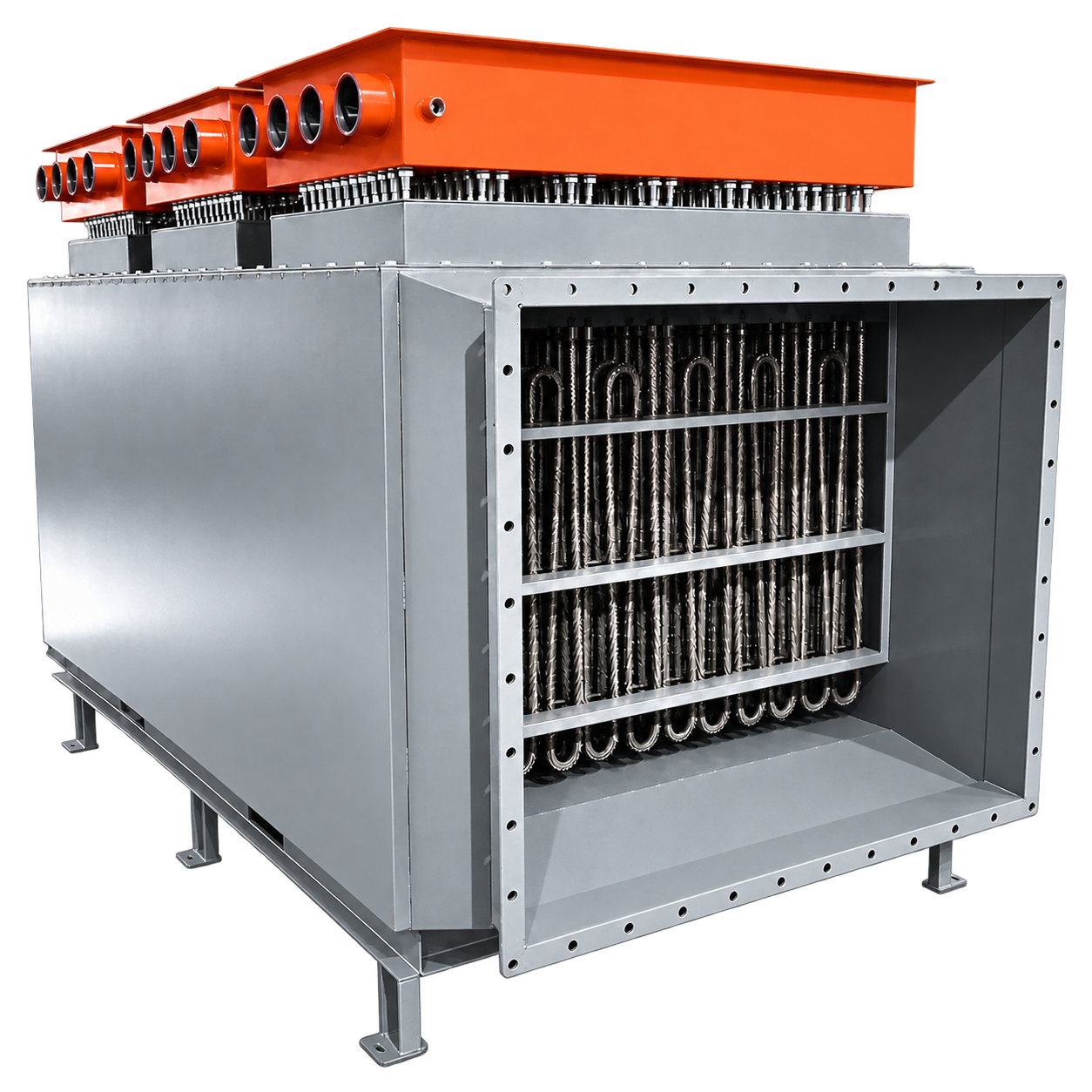
Waste gas volumes easily reach tens of thousands of cubic metres per hour with rises above 100 °C, so several heating banks are switched in stages to balance the electrical load.
 DIANREZHANELECTRIC HEATINGIndustry Solutions中文
INDUSTRY SOLUTION · S2
Waste-gas pre-heating and duct boosting before catalytic oxidation. Fix air volume, rise, pressure drop and fan interlocks.
SCENARIO
Abatement systems in coating, printing and chemical plants must lift ambient or low-temperature waste gas to the temperature catalytic oxidation, RTO or biological treatment needs. The duty is high volume, large temperature rise and continuous running, and the fan and heater must be reliably interlocked so the elements can never run dry.
Waste gas volumes easily reach tens of thousands of cubic metres per hour with rises above 100 °C, so several heating banks are switched in stages to balance the electrical load.
Heater bundles add duct resistance and shift the fan operating point; pressure drop must be checked against cross-section velocity with a spare access section.
The gas may carry acidic or sticky components, so element sheaths and duct walls need corrosion resistance and cleanability.
On fan failure or low flow the heating must break before anything else, and over-temperature must stop the unit before the elements overheat.
SOLUTION PATH
Size the heat duty from actual volume flow (m³/h) with inlet and target temperature, allowing for leakage and fluctuation, then set installed power and spare margin.
From duct cross-section and velocity fix the heated length, finned-tube layout and flow-straightening, keeping section velocity and pressure drop under control.
Switch heating groups against the temperature-rise demand and hold outlet temperature with PID or SSR power control.
Interlock the fan running signal into the heater circuit, and add over-temperature protection, flammable-gas alarm coupling and supply-failure protection.
RECOMMENDED EQUIPMENT
FAQ
Light-off temperature depends on the catalyst and commonly sits in the 250–350 °C band; the supplier’s data governs. Size the power from the difference between inlet and target temperature.
It depends on section velocity and fin density and is normally kept inside a reasonable range. Send the duct cross-section and available fan static pressure and the proposal will state the calculated resistance.
Yes. High-power installations are commonly built as two or more banks, one running while another is serviced, or switched by load stage to balance uptime and electricity cost.
INQUIRY PREP