Control accuracy
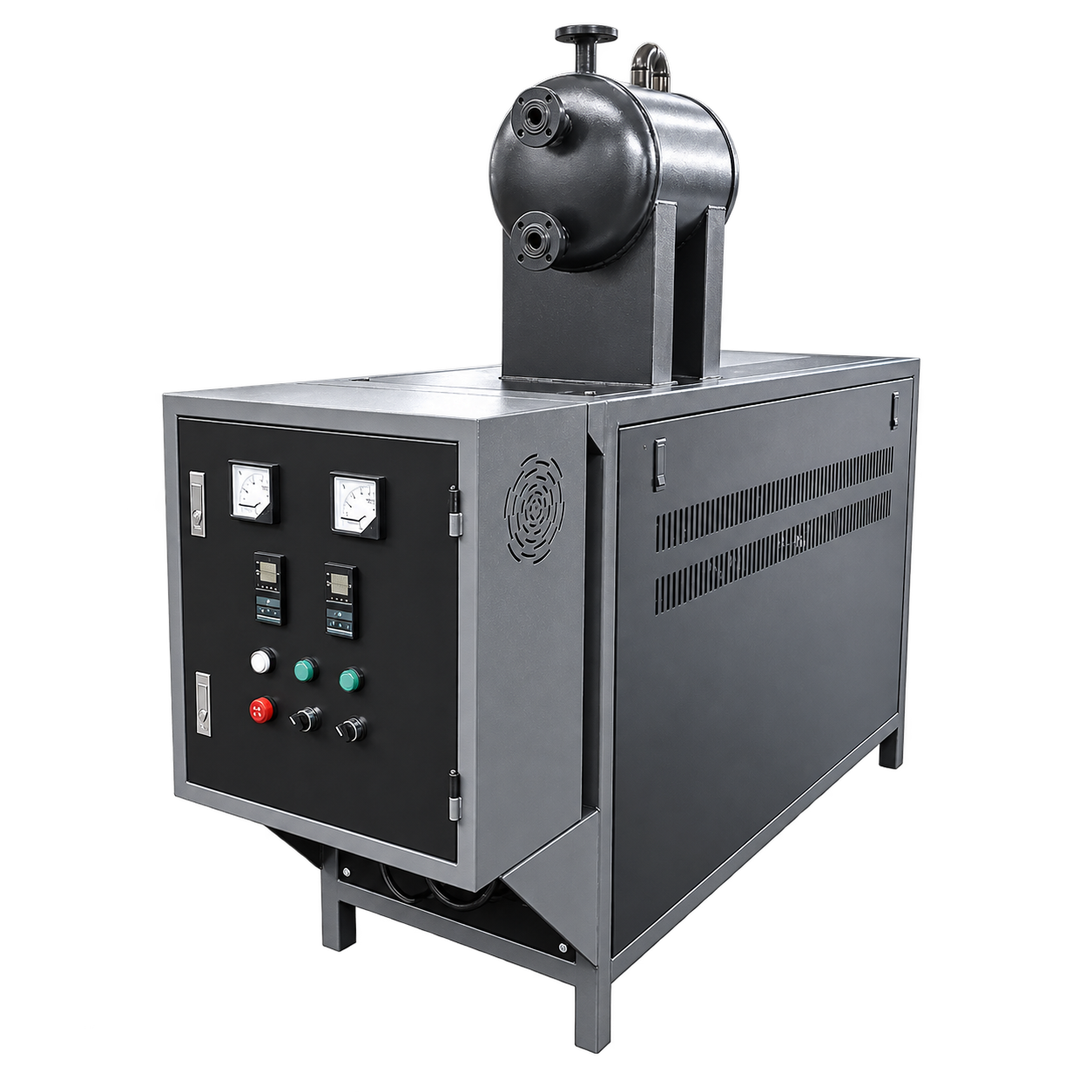
Exothermic reactions need fast response, typically ±1–3 °C, which depends on PID tuning and sensible splitting of heating power.
 DIANREZHANELECTRIC HEATINGIndustry Solutions中文
INDUSTRY SOLUTION · S4
Indirect heating and constant control through a thermal-oil loop. Fix the temperature band, circulation rate and heat consumers.
SCENARIO
Synthesis, resin, rubber calendering and composite moulding hold reactor jackets, rolls or moulds at a constant 150–350 °C. Direct element heating easily creates hot spots, so a thermal-oil loop transfers heat indirectly for even control, with a cooling changeover to cover exothermic reactions.
Exothermic reactions need fast response, typically ±1–3 °C, which depends on PID tuning and sensible splitting of heating power.
Hot oil generates vapour pressure and thermal expansion, so expansion-tank volume, venting and relief design must be calculated.
Local overheating accelerates coking and ageing of the heat-transfer oil; keep surface load and velocity in range and test the oil periodically.
One heater serving several reactors or rolls needs separate oil branches with individual control valves so the circuits do not disturb each other.
SOLUTION PATH
Establish reactor volume, jacket heat-transfer area, target band and ramp-rate requirement, then calculate heating and cooling power.
Derive oil flow and pump arrangement from heat duty and temperature difference, checking line resistance and velocity.
Staged heating plus continuous PID; where cooling is required add cold-oil substitution or a cooler so the system switches automatically between heating and cooling.
Expansion tank, storage tank, over-temperature protection, pressure monitoring and low-level alarm, meeting fire and discharge requirements.
RECOMMENDED EQUIPMENT
FAQ
Common thermal-oil systems run steadily around 300 °C. Higher bands need synthetic heat-transfer oil and a pressure check of the system, governed by the oil’s permitted service temperature.
The design can include a cold-oil substitution circuit or a plate cooler, with the controller switching automatically between heating and cooling on temperature deviation to hold the set point.
Expansion-tank volume depends on total oil charge and temperature rise; it is generally sized at 1.5–2 times the oil expansion with a safety reserve, finalised at design stage.
INQUIRY PREP